
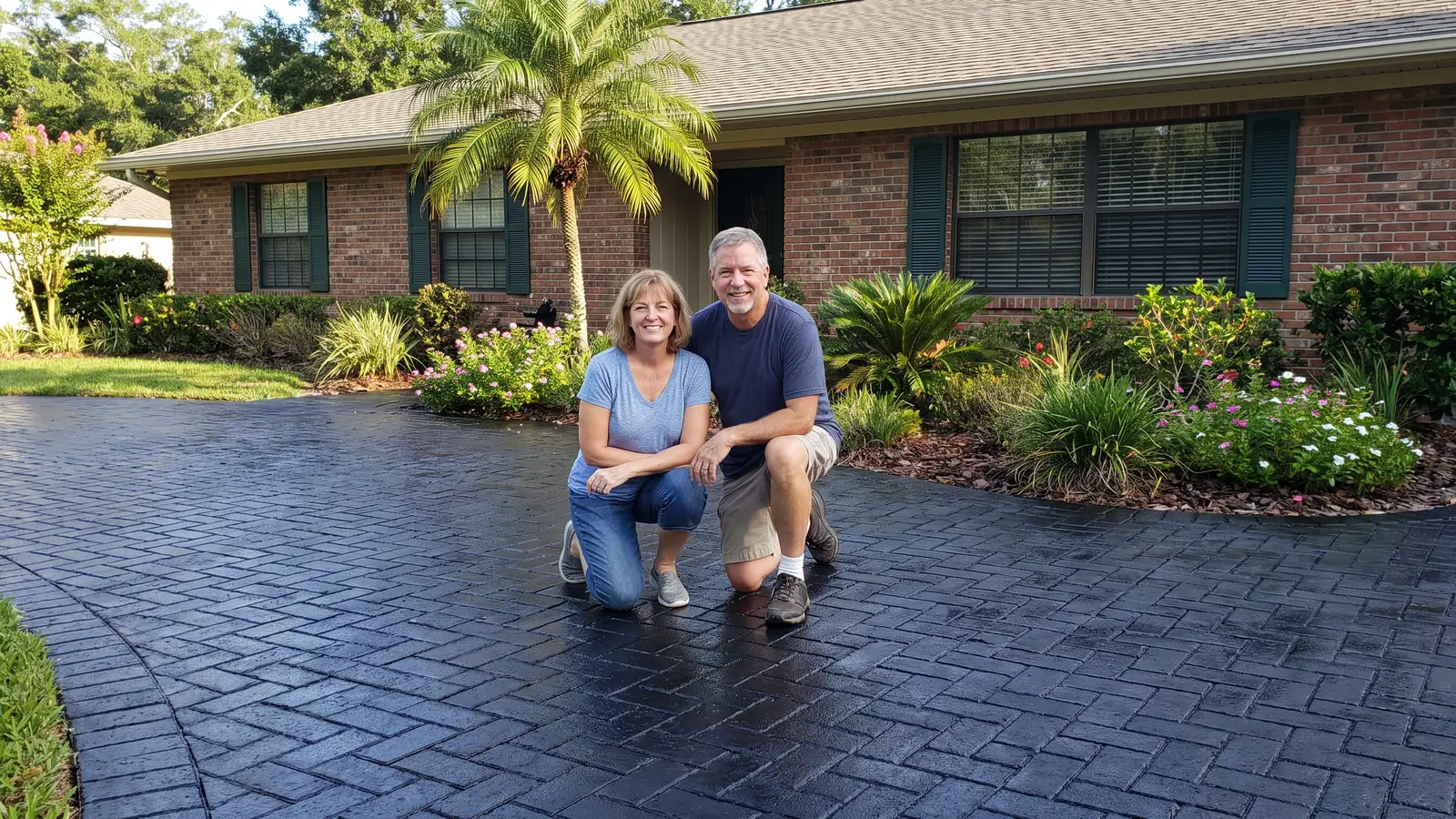
Paver sealing for San Marco homes
Paver Sealing in San Marco, FL
San Marco brick and pavers under the oaks can be cleaned and sealed, and (904) 842-3269 starts your free estimate.
- Brings out deeper paver color
- Fresh joint sand helps lock pavers in place
- Gives weeds less room to grow
- Makes the surface easier to keep clean
- Free estimate, no obligation
Request a Free Estimate
Free, no obligation.
Fast, careful paver sealing in San Marco
San Marco homeowners can book paver sealing with a free estimate from a local contractor. The work covers driveways, courtyards, front walks and pool decks around San Marco Square and the streets that wind toward the river. Fill in get your free estimate and a reply arrives within 1 business day, commonly far sooner.
Old brick and concrete here have seen decades of oak shade, summer storms and tires. Over time, green film settles in, the joints thin out and the color goes flat. A wash, fresh sand and the right coat can bring the warmth back, and keep the green from returning as fast. If a conversation suits you better, call (904) 842-3269.
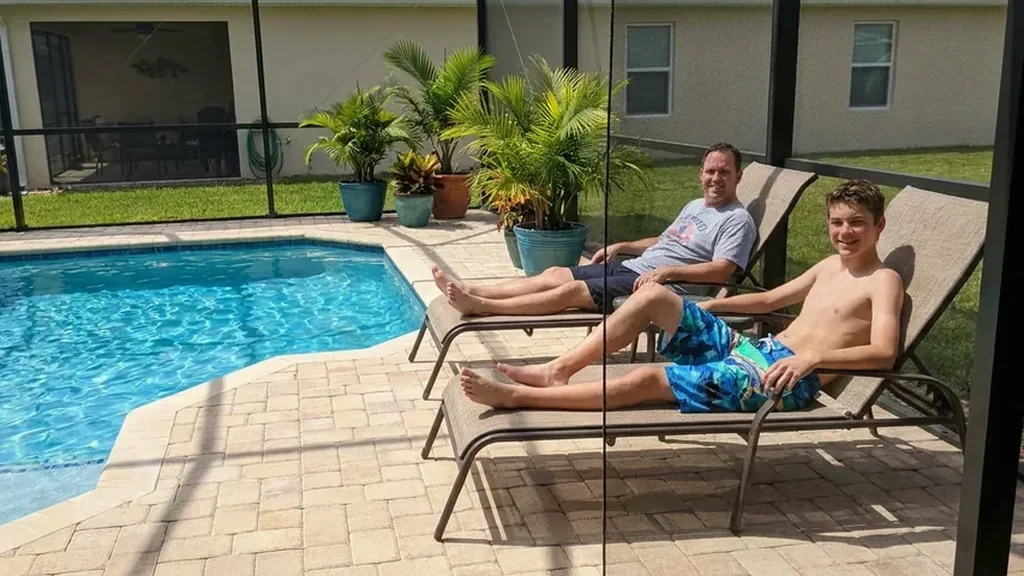
Why hire a local paver sealing contractor in San Marco?
San Marco has brick, concrete and mixed surfaces on lots that were laid out in the 1920s and 30s, and each needs its own sealer plan. A local contractor can sort that out on the first visit, so get your free estimate and describe what is in your yard.
A look before a price
The contractor sees your San Marco brick or pavers in person, tests how they take water and quotes only then. No price is given blind.
A published range
Around Northeast Florida the published price is $1.75 to $3.25 per square foot to clean, sand and seal. Compare each bid to it.
Brick and concrete differ
Old clay brick often calls for a breathable penetrating sealer, while concrete pavers can take a film-former. Ask which one you are getting.
You decide, with no strings
The visit is free, and saying no later carries no penalty. Take your time, ask about samples, compare it with other bids and pick the date that suits you.
Get Your Free Estimate in San Marco
Tell us about your pavers in San Marco.
Free, no obligation
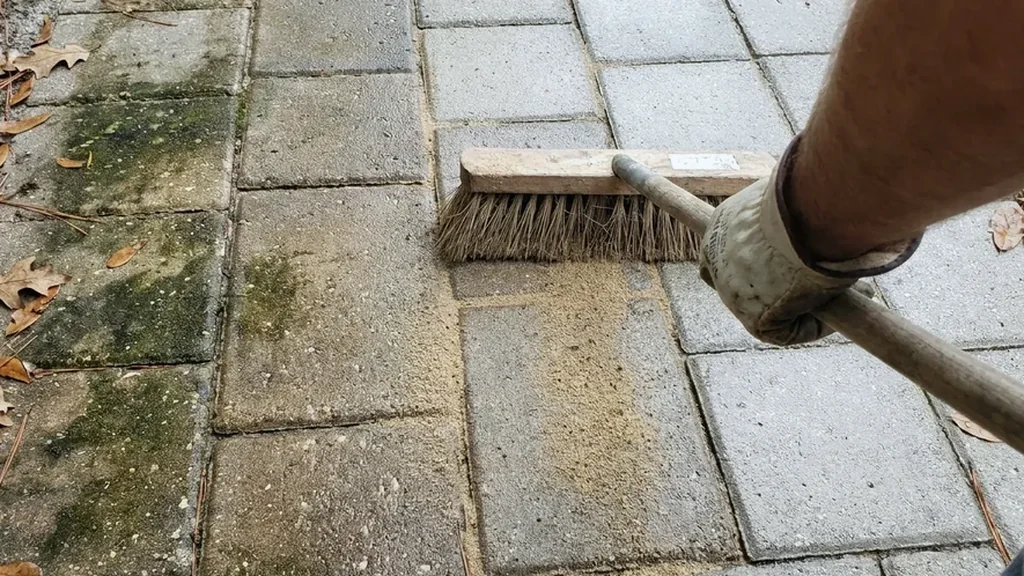
What paver problems show up most in San Marco?
Oak shade that keeps surfaces damp
A paver company near St. Augustine says oak canopy keeps a surface damp for hours after rain, and that mildew moves in once the sealer wears thin. Davin Park alone has live oaks planted in 1985, and Belmonte Park is ringed by oaks. Lots on those streets can stay shaded for most of the day, and wet leaves add tannin stains. Green film shows up first on the shady side, along the front walk and beside the garage. If a corner of your courtyard never sees sun, that is where to look.
Old clay brick that needs to breathe
Marco Lake began as a clay pit for the Gamble and Stockton Brick Company, a reminder of how much brick this area has seen. A Jacksonville cost guide points out that brick and natural stone soak up more than concrete and call for different sealer chemistry. A surface film can hold moisture in and flake on old brick. So the product choice matters before any coat goes on. A quick test spot, done in an out-of-the-way corner, shows how the surface takes water.
Flood-prone low streets
News4JAX reports that San Marco residents have dealt with flooding for generations. The St. Johns River is tidal at Downtown Jacksonville, so low lots near the water can stay wet. A brick maker cautions against sealant on any damp or dirty surface. If your driveway sits low, the dry window may take longer. Ask the contractor how they check for moisture, and what they do if a high tide is forecast.
Historic rules on older lots
The city requires a Certificate of Appropriateness for exterior work, including driveways, on properties in a local historic district or on a local landmark. An owner can look up an address on the city's Land Development Map. Sealing is not the same as rebuilding a drive, but a change in color or sheen is worth a question. Ask before you book if your address is in a district. A local contractor can tell you who to call, and what to have ready.
Joint sand lost to rain
Safe Touch says warm-season storms drain sand from joints, and that sealing over gaps lets weeds return. San Marco's brick walks and patios often have narrow joints, and sand leaves them quickly. Fresh sand goes in before any coat. That is also how weeds are kept out for longer, since full joints leave them little to grab.
Which San Marco streets have the oldest pavers and brick?
The oldest hardscape tends to sit on the oldest streets. Alexandria Place has a median build year of 1939 on the county roll, and Fletcher Park began as World War I housing finished in 1919. Walkways and courtyards from those eras may be brick, concrete or a mix. Tell the contractor what you have when you call (904) 842-3269, and share photos of any lifted spots.
San Marco grew from South Jacksonville, which was annexed by the city on January 1, 1932. The planners leaned on the City Beautiful movement, with winding streets, planted medians and parks, so shade and mature trees show up almost everywhere. If your yard looks like a park, get your free estimate and mention the trees.
Colonial Manor holds the Red Bank Plantation House, which dates to 1857, and Treaty Oak Park has one of the city's oldest live oaks. Along Hendricks Avenue, the South Jacksonville City Hall dates to 1915 and Hendricks Avenue Elementary to 1942, so older buildings and older yards run deep. A contractor who knows these streets can plan a job for each type of surface. To ask about your street, get your free estimate.
What does paver sealing cost in San Marco?
Prices posted around Northeast Florida span $1.75 to $3.25 a square foot to wash, sand and seal. A San Marco lot may sit near the higher end if it has brick, shade growth or old sealer to strip, while a plain concrete drive in full sun costs less. Small courtyards cost more per square foot, because setup time does not shrink. To get a number for your yard, get your free estimate.
Natural stone and brick are more porous than concrete and can need a different sealer, which can change the price. Tight courtyards, gates and walled yards add carrying time, and a historic review, if needed, can add days. Call (904) 842-3269 and the contractor can sort out which of these touch your yard.
| Paved area | Typical example | Clean, sand and seal |
|---|---|---|
| 300 sq ft | Small patio or walkway | $525 to $975 |
| 600 sq ft | Two car driveway | $1,050 to $1,950 |
| 1,000 sq ft | Large driveway or pool deck | $1,750 to $3,250 |
| 1,500 sq ft | Driveway plus pool deck | $2,625 to $4,875 |
Math based on the $1.75 to $3.25 per square foot that Northeast Florida paver companies publish. Your contractor sets the actual price after seeing the surface. Repairs, leveling and stripping failed sealer are usually extra.
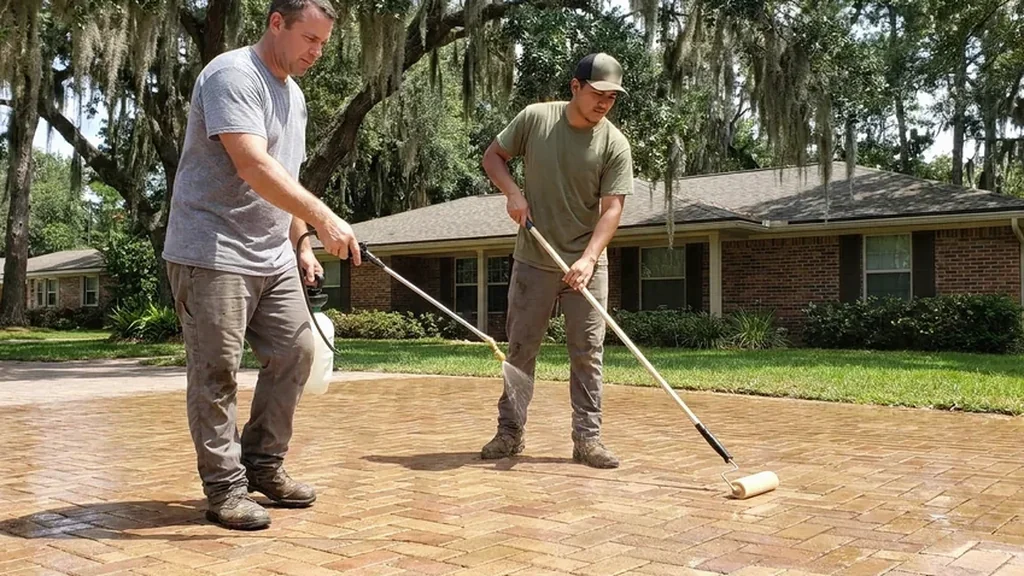
How does a paver sealing job work in San Marco?
Identify each surface
The contractor walks the lot and notes what is brick, what is concrete and what is stone, along with where the shade and the water fall. Each takes a different product, and a yard with both brick and concrete needs a plan for each. Past coats are checked, since water-based sealer cannot go over solvent-based. You get the findings in plain words.
Wash and let the surface dry
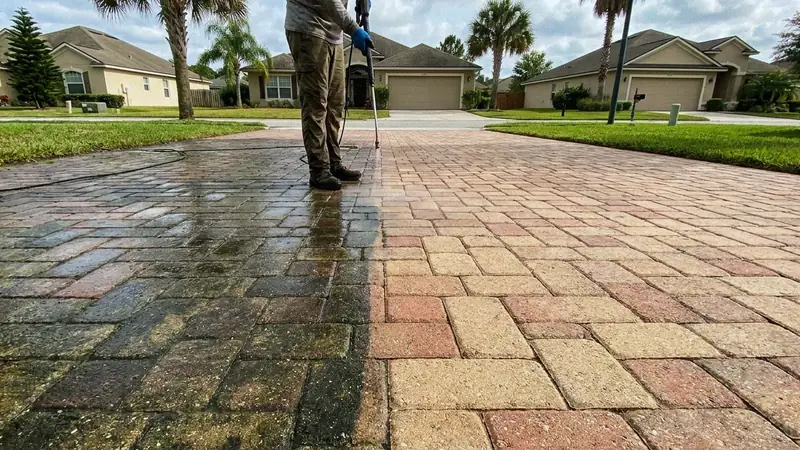
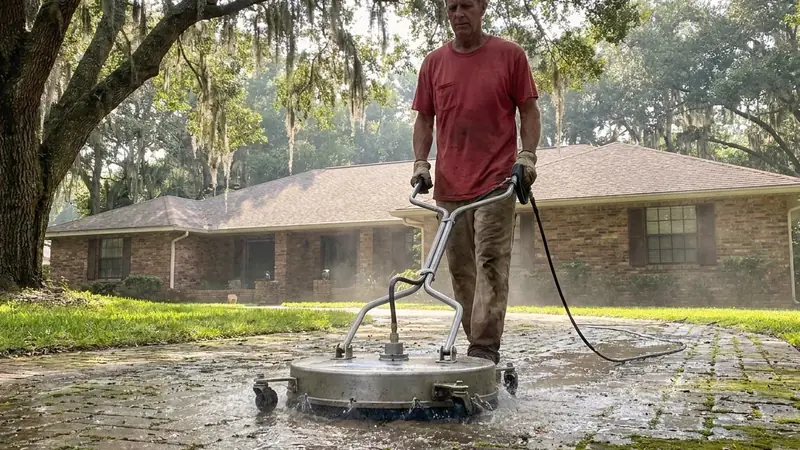
The wash lifts oak stains, algae and old dirt without digging into brick faces or loosening the joints more than needed. A brick manufacturer says sealant should never go over damp or dirty surfaces or efflorescence. Shaded San Marco yards may need a long dry window, so the contractor checks before returning. Leaf stains and algae come off in this step, and plants are protected.
Joint sand goes back in
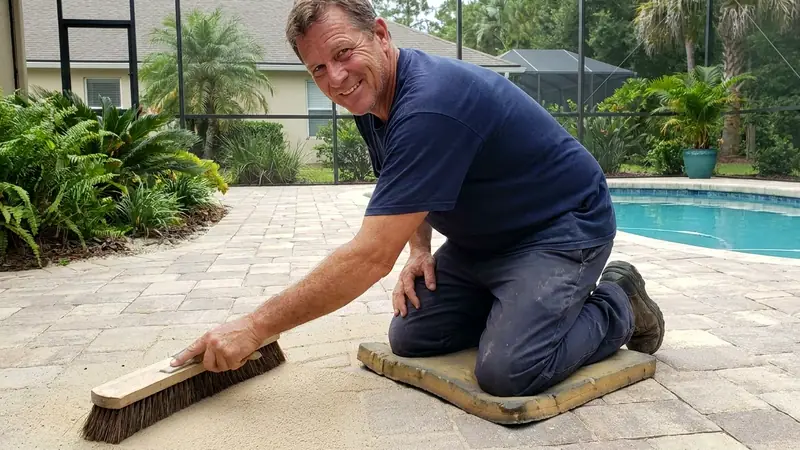
Narrow brick joints lose sand to rain, so they are filled again before sealing. The surface is swept clean so no loose sand ends up under the coat. Edges and steps get a second look because they wear first. If the old joints were hollow, expect more sand than you planned for.
Choose and test the sealer
A small test patch shows how the surface takes the product and what the finish looks like. Matte, satin or wet look can be compared in the light your yard gets, morning and late day. You approve it before the full coat goes on, and you can ask for a different sheen if it looks off.
Apply and cure
The sealer is sprayed on low and rolled to an even film. Surebond says its sealers need 24 dry hours to cure. Later on, beads of water on the surface mean the coat is doing its job. Trident Protects says excess sealer left to dry can look cloudy, so the contractor rolls it out evenly.
Complete paver services in San Marco
A San Marco job starts with a surface test. The contractor washes, refills the joints and lets everything dry before any coat, and 904 Paver Sealing says prep takes 2 to 3 hours for each hour of sealing. For brick, a breathable product keeps water moving out. Call (904) 842-3269 to hear how that applies.
San Marco lots mix surfaces. Brick walks, concrete pavers on the drive and a travertine pool deck may sit on one property. A Northeast Florida company says a yard with both brick and concrete needs a plan for each. Tell the contractor which you have when you get your free estimate.
Water-based sealer cannot go over solvent-based. Old clay brick usually takes a silane or siloxane product that leaves the look alone, says one company, and concrete can take a film-former for more sheen. Matte suits an older house, and a wet look deepens the color but shows scuffs sooner. Call (904) 842-3269 to talk through the options.
San Marco oaks keep surfaces damp long after rain, so the dry window may run past the usual 24 hours. Surebond wants a dry surface before and after the coat. Spring and fall often give the steadiest dry stretch. To find a date, get your free estimate.
Questions to ask before you hire
- Who do I call if the finish turns cloudy or starts to peel?
- How do you protect my plants, my pool water and my screen enclosure?
- How long do the pavers dry after cleaning before the first coat goes on?
- Can you show me the sealer's product sheet before you start?
- How will I know when my pavers need sealing again?
- What happens to the job if it rains soon after the sealer is down?
- Will you wash at a pressure that leaves my joint sand in place?
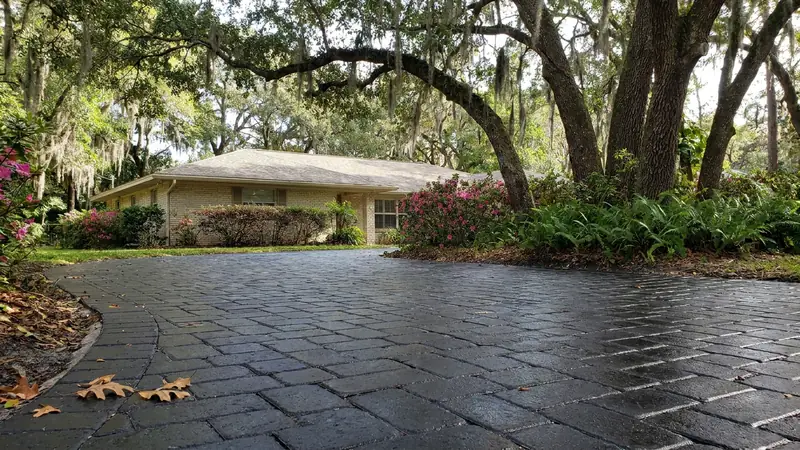
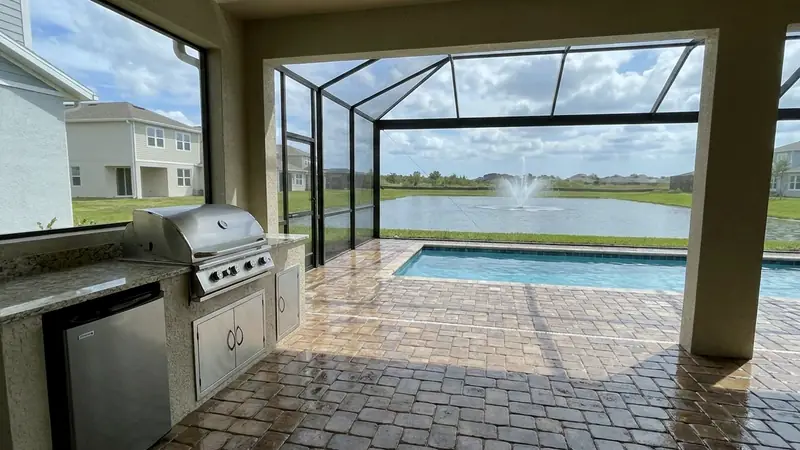
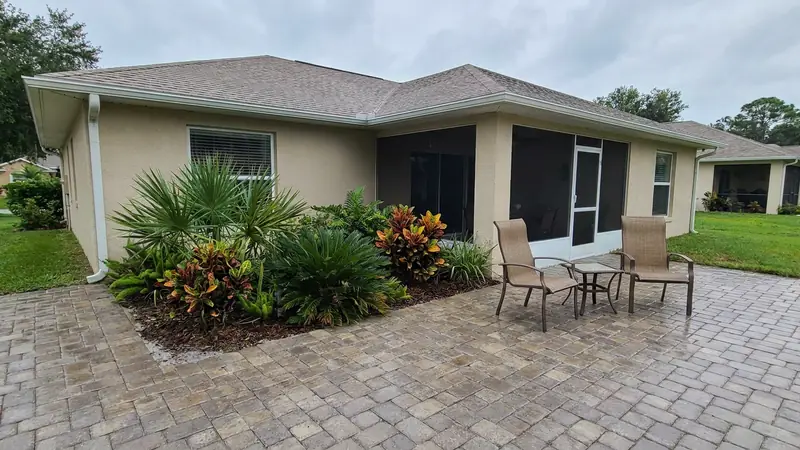
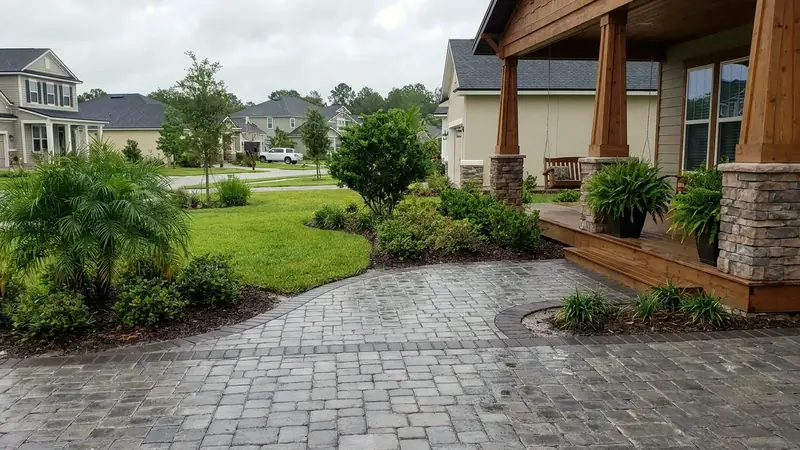
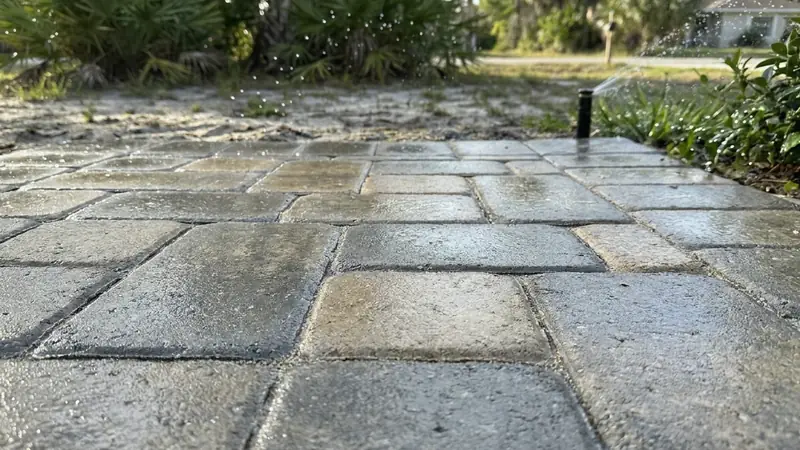
What do sealed pavers look like around San Marco?
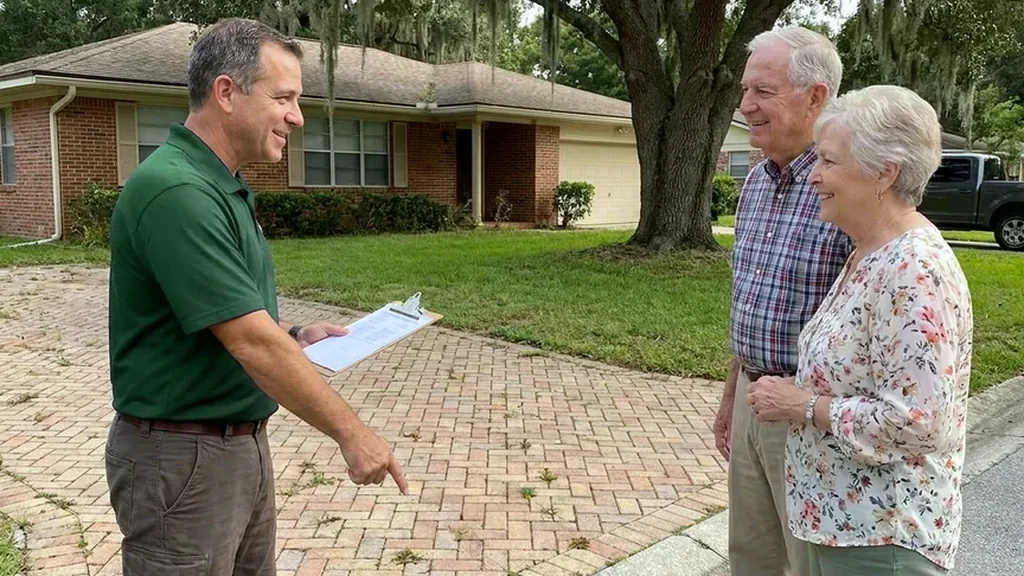
Why local matters in San Marco
San Marco has narrow lots, mature trees and older homes, and many yards are walled or gated. A contractor who works the neighborhood knows where gear can park and where it must be carried. That keeps the job smooth and the visit short, and the quote reflects the real lot. To check timing, get your free estimate.
Historic questions come up here, since the area has local districts and landmarks. A local contractor can tell you if your street is likely to need review and where to check the city's Land Development Map. That saves a wasted booking and a lost week. Call (904) 842-3269 and mention your address, and the contractor will point you to the right office.
Local also means a quick return if weather changes plans, and a fair idea of what summer does to a San Marco street. San Marco rain can arrive fast in summer, and a coat caught by it may cloud. A nearby crew can reschedule without much delay and often by phone the same day. To set a date, get your free estimate.
Why does San Marco look the way it does?
It was planned around winding streets, planted medians and parks. The area grew from South Jacksonville, which had about 600 residents in 1907 and no streetlights, sidewalks or paved roads yet. The art deco San Marco Theatre opened in 1938, and the branch library opened in 1950. If you live near the Square, call (904) 842-3269 and ask what the older surfaces around it usually need.
Belmonte Park, platted in 1922, and Davin Park are among the 14 parks that shaped the neighborhood. Theatre Jacksonville's building at 2032 San Marco Boulevard was added to the National Register of Historic Places in 1991. The San Marco Preservation Society formed in 1975, when neighbors worried about the aging Square and its fountain. To ask about pavers near any of these, get your free estimate, and mention the closest park or street.
Frequently Asked Questions
What is the going rate per square foot to seal San Marco pavers?
Rates around Northeast Florida are posted at $1.75 to $3.25 a square foot for the wash, sand and seal. San Marco shade, brick and old sealer can push a job toward the top, and a plain open drive can come in lower. The visit is free, and saying no later carries no penalty.
Do pavers in San Marco benefit from sealing?
Yes, for sound pavers or brick. Sealer slows fade, helps hold the joint sand, slows stains and makes cleaning easier. In shaded San Marco yards it also slows mildew. A sealed surface is easier to clean next time.
Do you clean, sand and seal San Marco pavers in one visit?
A local contractor does all three steps as one job, usually over more than one day. The surface must dry between washing and sealing. Ask for the schedule when you get the quote, and ask what happens if rain moves a day.
Why is paver sealing so expensive in San Marco?
Prep takes most of the time. A Jacksonville company, 904 Paver Sealing, counts two to three hours of prep for each hour of sealing. Brick and shaded surfaces can add more. Ask for the quote in line items so you can see each step.
Does old brick in San Marco need a different sealer?
Often yes. Brick is more porous than concrete, and one company points old clay brick toward a breathable penetrating product. A surface film can trap moisture and flake, so ask which type the contractor plans to use and why.
Do I need city approval to seal pavers in a San Marco historic district?
Possibly. The city requires a Certificate of Appropriateness for exterior work, including driveways, in a local historic district or on a landmark. Search your street on the city's Land Development Map, or ask the contractor to help you read it. A contractor can help you read the result, and many small projects clear in a few weeks.
How long does sealer last on a shaded San Marco patio?
Companies in the region quote two to five years between coats. Shade and damp can shorten that, since a St. Augustine area company says mildew moves in once sealer wears thin. Water that stops beading is the simple sign to call.
Can I seal pavers when my San Marco street floods?
Yes, once the surface is fully dry. Sealer should never go over damp or dirty pavers, because the dampness gets locked in. After a high-water event, give the surface time to clear. Low lots may need a longer dry window, and the contractor may check the surface more than once. A wait of a day or two beats a cloudy finish.
What finish looks right on San Marco brick?
Many owners pick a natural look that keeps the brick tone and the age of the house. A wet look gives richer color, but scuffs show up quicker. Ask for a sample patch and judge it in your own light.
Does sealing stop weeds between San Marco pavers?
It helps when the joints are full first. Safe Touch notes that sealing over open joints brings weeds back. The contractor refills the sand, then seals.
Can the contractor seal pavers that were sealed before in San Marco?
Often yes, if the old coat is sound and the type matches. Water-based sealer will not bond over solvent-based, which is why the contractor checks the old coat first. Failed sealer may need stripping, which Safe Touch says costs more than a standard seal.
How soon can I use my driveway after sealing?
Leave a dry day or so, because Surebond says its sealers cure in about 24 hours. Ask the contractor about foot traffic, which may be fine sooner. Keep pets and cars off until then.
Nearby areas we serve
Ready for a Free Estimate in San Marco?
Call (904) 842-3269 and tell us about your pavers.
Free, no obligation