
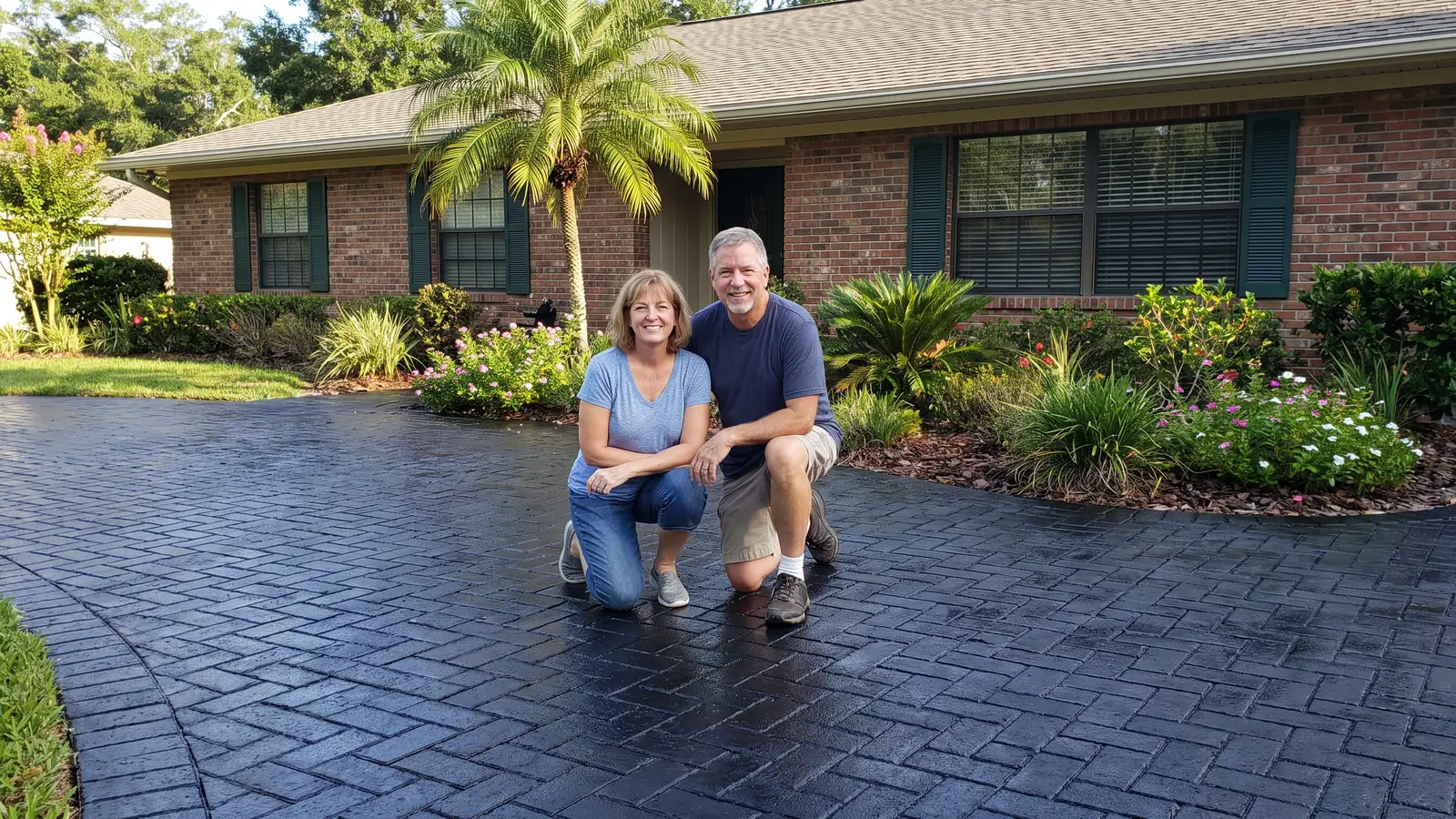
Paver sealing for Panama Park homes
Paver Sealing in Panama Park, FL
Panama Park pavers, from Culver Elementary's eagle towers to the Trout River, can get a free sealing estimate at (904) 842-3269.
- Brings out deeper paver color
- Fresh joint sand helps lock pavers in place
- Gives weeds less room to grow
- Makes the surface easier to keep clean
- Free estimate, no obligation
Request a Free Estimate
Free, no obligation.
Fast, careful paver sealing in Panama Park
Paver sealing in Panama Park begins with a free estimate, and a local contractor then cleans, re-sands and seals driveways, walkways and patios. Send a request from anywhere between Main Street and the Trout River and you will hear back within 1 business day, usually much sooner. To get started, you can get your free estimate.
Picture the driveway you pull onto every evening: gray streaks from the trees, green in the joints and a corner that has lost its color. After a wash, fresh sand and a new coat, those same pavers go back to one steady shade. Call (904) 842-3269, describe what you see, and ask for a price before anything is booked.
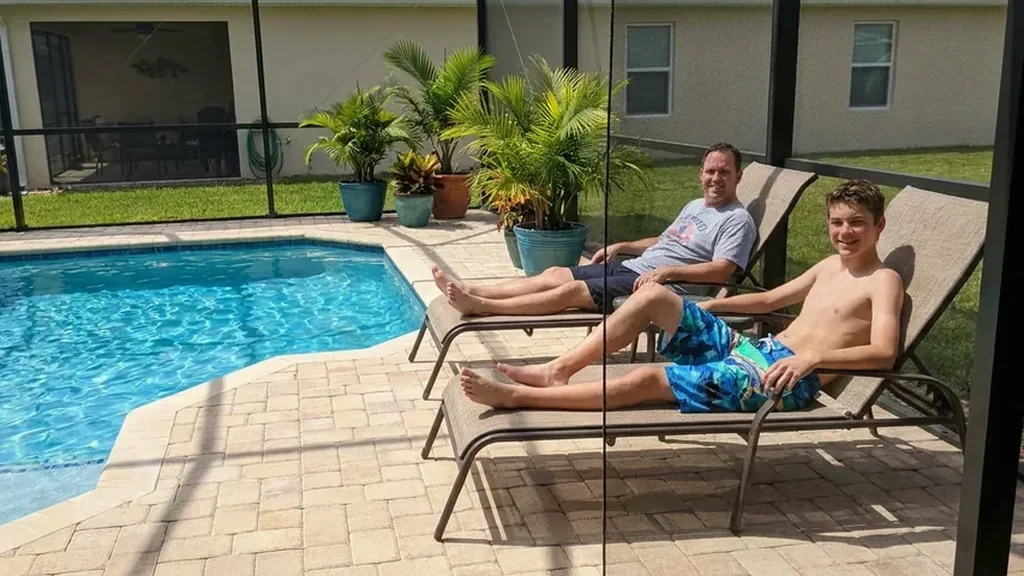
Why hire a local paver sealing contractor in Panama Park?
Panama Park sits between two rivers and under old street trees, so damp pavers and falling leaves come with the address. A local contractor plans for both, and you can get your free estimate to hear how.
Free look, price first
The contractor looks over your Panama Park pavers at no charge and gives you a price before you agree to a date.
A range to check against
The going rate posted in this region is $1.75 to $3.25 per square foot for a full clean, sand and seal. Hold your Panama Park quote up to that.
Matte or wet look
Matte hides scuffs from work trucks and trailers longer. A wet look adds shine, though it shows scuffs sooner on a busy driveway.
You make the call
You pick the day, the finish and whether to go ahead at all. A Panama Park estimate carries no obligation.
Get Your Free Estimate in Panama Park
Tell us about your pavers in Panama Park.
Free, no obligation
What paver problems show up most in Panama Park?
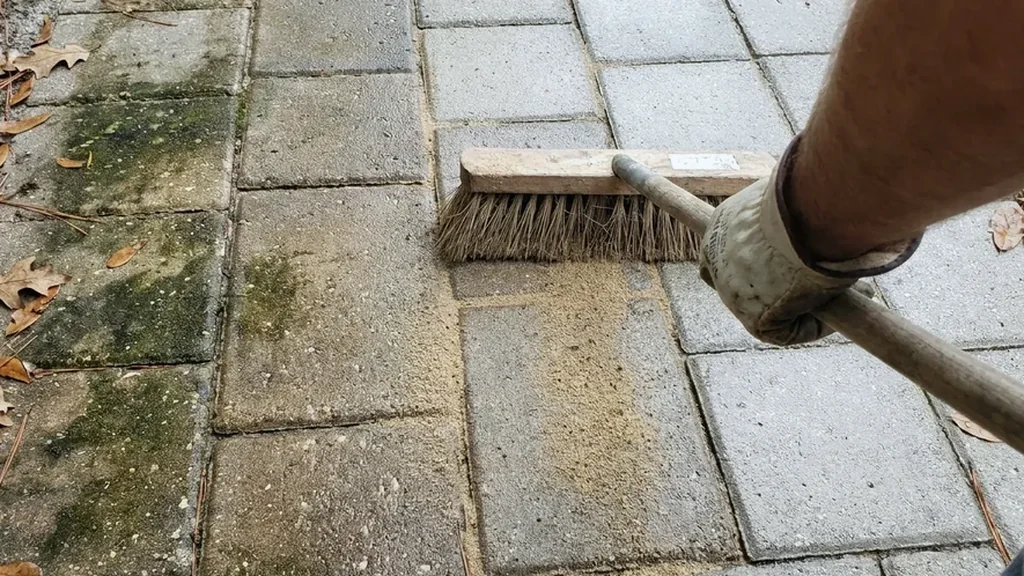
Gray and green under the old street trees
An early promotional description of Panama Park counted more than 8,000 trees on its streets, among them magnolias, oaks, olives and cedars. Green growth tends to start where shade is thick and the pavers never fully dry out, so a driveway under one of those older trees can go green at the edges first. That film has to be washed off before any sealer, because sealer would lock it in. Leaves and seed pods drop on the same spots every year, so a shaded walkway can look tired again sooner than a sunny one.
A river that keeps the air damp
Panama Park lies where the Trout River meets the St. Johns, and the Trout is about half a mile wide at Main Street. Lots close to the water may dry out slowly after rain. Sealer needs a dry surface, which means a contractor may wait longer on a shaded lot near the river than on an open one a few blocks inland. You may also see white haze if sealer goes down over trapped moisture, which is one more reason the wait is worth it. A lot a block from the river may dry in a day while one on the water side takes two.
Oil and rust where boats and trucks park
The Bert Maxwell Boat Ramp opened in 1961 on the Trout River, and marinas still work this waterfront. If you tow a boat or park a work truck on your pavers, drips and tire marks add up. A Jacksonville paver company pre-treats oil, rust and tire marks before sealing. Some deep stains, it adds, never lift all the way. Telling the contractor early what usually parks there helps set the right expectation for the finished color.
Joint sand that follows the rain out
Duval County sits on sand. The USDA describes the Ortega soil series, first mapped here, as deep, moderately well drained sand. Jacksonville also gets about 52 inches of rain a year, mostly in short summer downpours. Joints on a Panama Park driveway can lose sand fast, and open joints let in soil and weeds. Once weeds root in a joint they push the pavers apart, and the gap grows with every storm.
A coat that a past owner put down
Panama Park lots were first sold in 1910, and the ZIP code has about 57 percent owner-occupied homes. That means many driveways and walks were laid or sealed by someone before you. A water-based product cannot be laid over a solvent-based one, so the contractor has to find out what is already on your pavers before choosing a product. Ask the previous owner if you can, and keep the product name once you know it for the next coat. On a rented property, the landlord or manager may have the paperwork.
Do brick homes near 44th Street and riverside lots need different paver plans?
Yes, a little, because the two settings ask for different care. Near 44th Street an early description says most homes are brick, and the Oakwood Street area has well-kept historic houses. Rinse water and cleaners should stay off that masonry, so tell the contractor your street when you get your free estimate.
Lots near the water sit beside a river that is about half a mile wide at Main Street. Pavers there can stay damp longer, so a patient dry-out before sealing is a fair thing to plan for. If your lot is close to the Trout, call (904) 842-3269 and ask how the contractor handles timing.
The CSX railroad splits Panama Park, and Evergreen Avenue was once the neighborhood's early shopping center. Early deed restrictions also kept homes at least 25 feet back from the street. A front yard with some depth means a driveway and walkway may cover more ground than you expect, so measure them together when you get your free estimate.
What does paver sealing cost in Panama Park?
Companies around here commonly post $1.75 to $3.25 a square foot for a full clean, sand and seal. A Panama Park driveway plus a front walk and a small back patio adds up quickly, since every square foot is counted. Stripping an old failed coat costs more than a plain reseal. To see where your pavers land in that range, get your free estimate.
A Panama Park quote shifts with four things: heavy shade growth, lost joint sand, oil or rust from parked boats and trucks, and an old coat that has to be handled first. Tight access to a back patio adds carrying time, and gates or a narrow side yard add prep. Call (904) 842-3269, and the contractor can sort out which of these fit your lot before a day is booked.
| Paved area | Typical example | Clean, sand and seal |
|---|---|---|
| 300 sq ft | Small patio or walkway | $525 to $975 |
| 600 sq ft | Two car driveway | $1,050 to $1,950 |
| 1,000 sq ft | Large driveway or pool deck | $1,750 to $3,250 |
| 1,500 sq ft | Driveway plus pool deck | $2,625 to $4,875 |
Math based on the $1.75 to $3.25 per square foot that Northeast Florida paver companies publish. Your contractor sets the actual price after seeing the surface. Repairs, leveling and stripping failed sealer are usually extra.
How does a paver sealing job work in Panama Park?
Walk the lot and read what is on it
First comes a close look at how your Panama Park pavers drain, where the street trees leave shade and what a past owner may have put down. Sunken spots are fixed before anything else, because sealer keeps any dip it covers. A previously sealed surface raises a question about the product, since a water-based coat will not take over a solvent-based one.
Wash off the green and the grime
The wash lifts the film left by street trees and the drips from boats and work trucks. Rust and oil spots get their own treatment ahead of the wash. Near brick homes the rinse water is aimed away from the masonry. A clean surface is what makes the finished color even, and any green patch left behind will show through a wet look finish.
New joint sand before the coat
Washing pulls sand out of the joints, and it goes back in before sealing. Sandy ground across Duval County lets open joints take in soil, and weeds follow. The joints are filled, the surface is swept, and any area that lost a lot of sand gets a second pass so the pavers stay put.
Let the pavers dry all the way
One sealer maker's technical bulletin asks for 24 hours of drying after cleaning or rain. Summer storms and a damp lot near the river can stretch that. A careful contractor moves the date instead of sealing wet pavers, because trapped water is how a cloudy white haze forms under the coat.
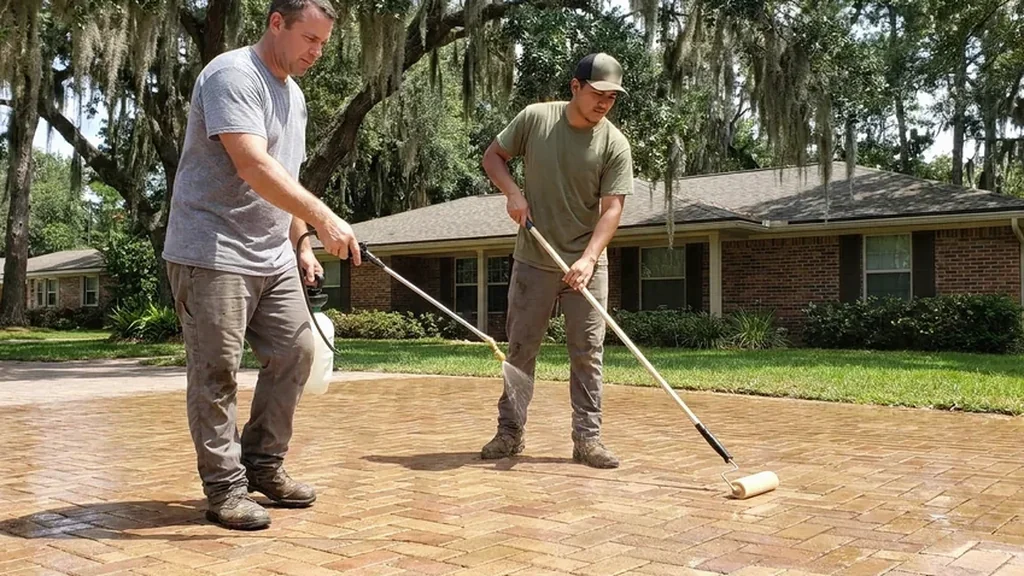
Apply the sealer and keep traffic off
A Jacksonville paver company says crews usually spray the sealer and back-roll it into the joints. Walking is usually fine within a few hours, while cars should stay off about a day. Plan to park on the street for that day, and keep sprinklers off the driveway until the contractor says the coat has cured.
Complete paver services in Panama Park
A Panama Park job runs in order: wash, re-sand, dry, then seal. The wash clears street-tree film and truck drips, and it shows which joints have lost the most sand. New sand goes into the joints, and sealer goes on last so nothing dirty is locked under it. Ask how long each stage takes on your lot by calling (904) 842-3269.
Driveways take tires, trailer wheels and any boat or truck you park. Front walks near the old street trees go green first. Backyard patios near the river stay damp the longest, and a pool deck, if you have one, is handled as its own surface. When you get your free estimate, name the surfaces you have, and each is measured and priced on its own.
Sealer comes down to water-based or solvent-based, then to a matte or a wet look. If a past owner used a solvent-based coat, a water-based product cannot follow it. Matte quiets the look on a busy driveway, while a wet look shows scuffs sooner. Call (904) 842-3269 and talk through the choice for your house.
Summer rain in Jacksonville comes in short, hard storms, so a Panama Park date can slide. Quoted time between coats runs from two to five years. A shaded lot near the river may need its next coat sooner, and a sunny driveway away from the water may stretch longer. For a date that fits your street, get your free estimate.
Questions to ask before you hire
- How do you handle the low spots where water pools on my pavers?
- How do you protect my plants, my pool water and my screen enclosure?
- What deposit, if any, is due before the work starts?
- Will you wash at a pressure that leaves my joint sand in place?
- What do you do about green algae along the shady side of my driveway?
- How will I know when my pavers need sealing again?
- How long do the pavers dry after cleaning before the first coat goes on?
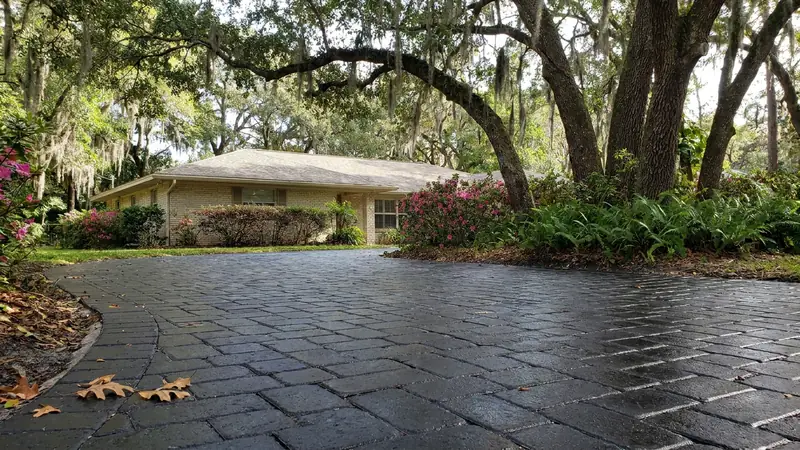
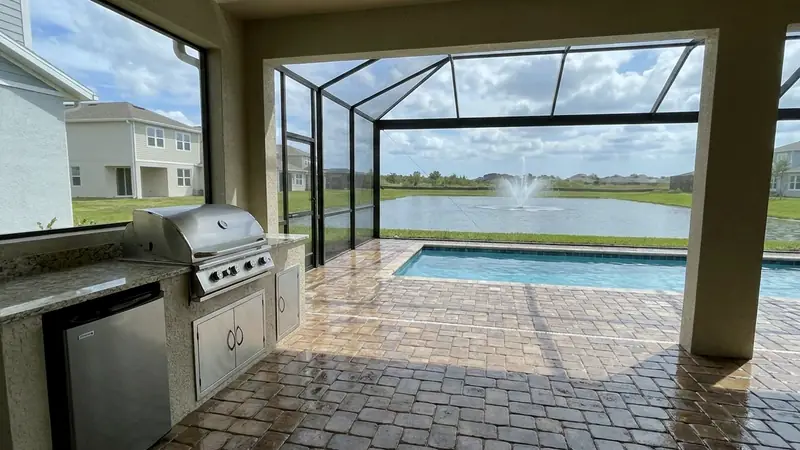
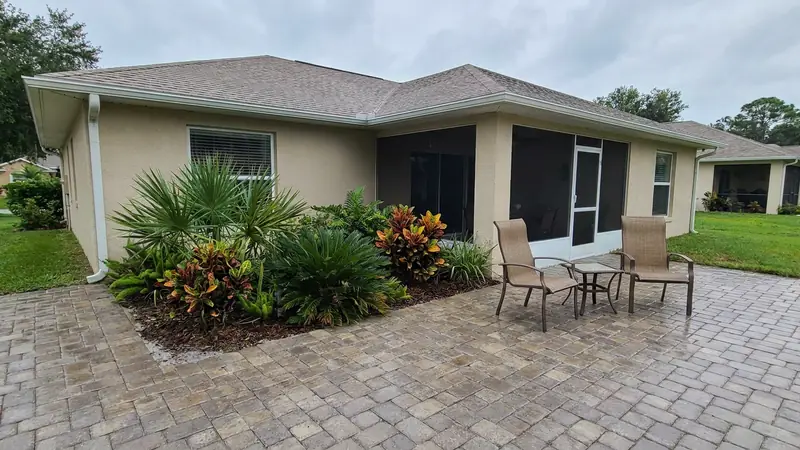
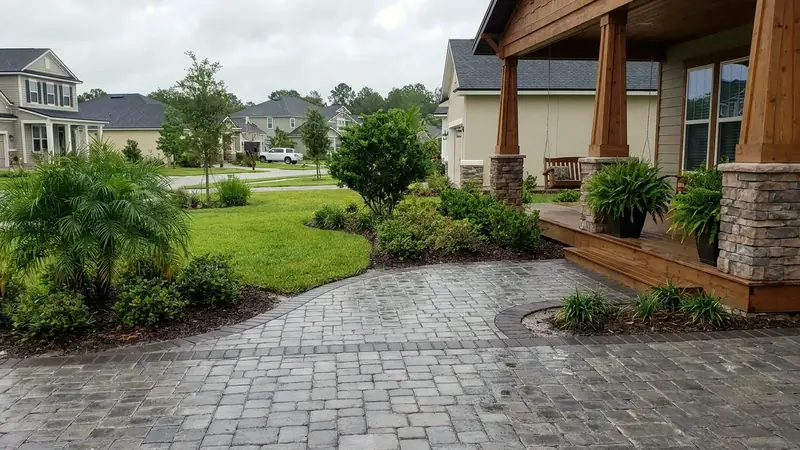
What do sealed pavers look like around Panama Park?
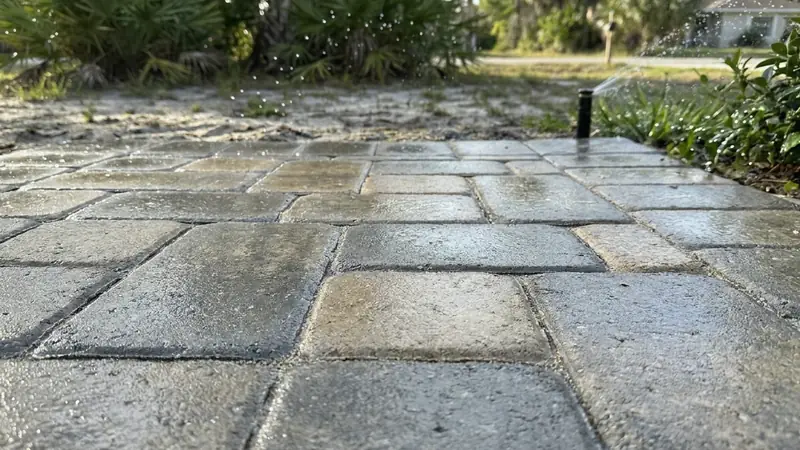
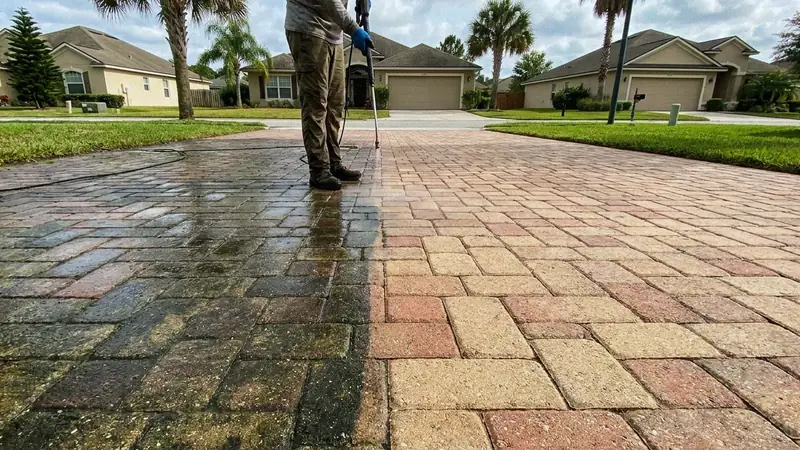
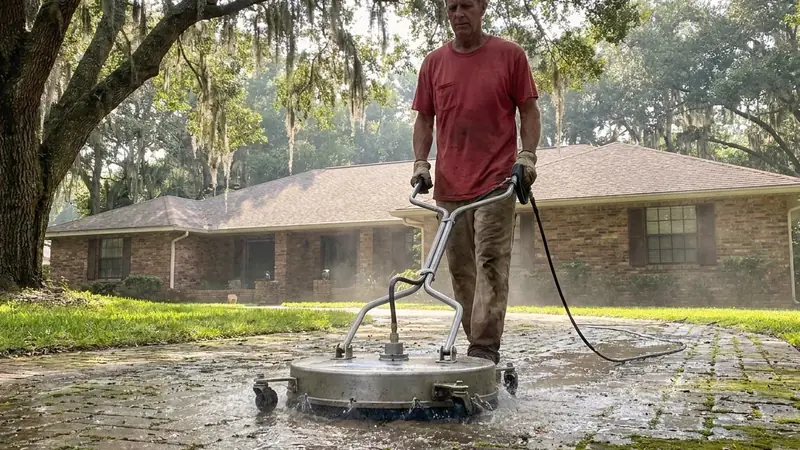
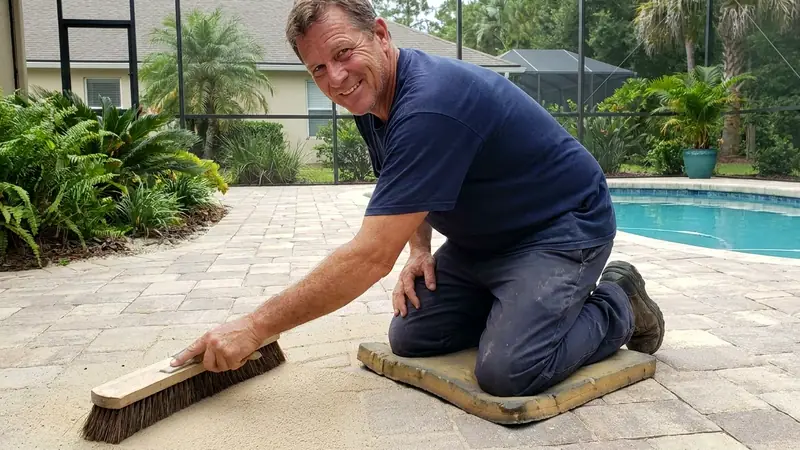
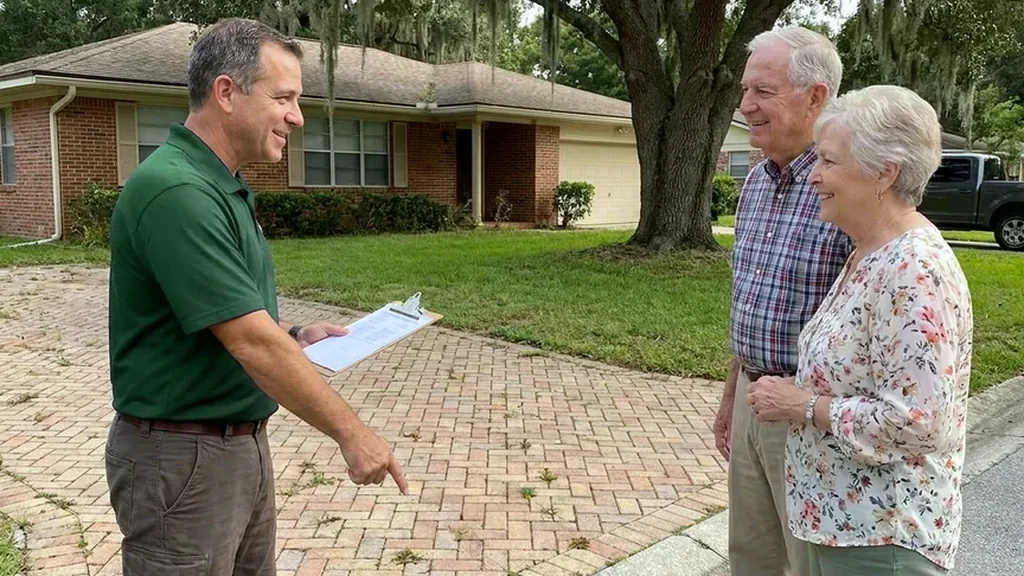
Why local matters in Panama Park
A contractor who works Panama Park will ask which side of the CSX tracks you are on and how close the Trout River is. Those answers change the dry-out time before sealer can go on. Someone from across town may not ask, and a missed question can mean a coat that clouds. To reach a contractor who works the north side of town, call (904) 842-3269.
Local habits matter too. Boats, trailers and work trucks are part of a waterfront neighborhood, and their drips end up on pavers. A contractor who sees that often knows to pre-treat first, and to set expectations about stains that may never fade fully. If that sounds like your driveway, get your free estimate and mention what usually parks there.
Older streets add another layer. Brick fronts near 44th Street and historic homes around Oakwood Street need care with rinse water and cleaners. A local contractor plans the wash around that masonry, so the house is not streaked while the pavers get clean. Ask about it when you call (904) 842-3269, with no obligation to hire anyone.
Which Panama Park landmarks help a contractor find my street?
Start with the city park at 6912 Buffalo Avenue, which the city bought in 1929 and which now has a splash pad, tennis courts and ballfields. Lola M. Culver Elementary opened in 1916 with two towers topped by terracotta eagles, and Panama Park Pharmacy has stood on North Main Street since 1928. Name the one closest to you when you get your free estimate, and the contractor can place your street on the map in seconds.
The Old Trout River Bridge Pier dates to 1930, and the current swing bridge over the Trout was built in 1938. West of the I-95 bridge, the Bert Maxwell Boat Ramp has served the river since 1961. If you live near any of these Panama Park landmarks, call (904) 842-3269 and give your cross streets so the estimate visit is easy to schedule.
Frequently Asked Questions
How much does paver sealing cost per square foot in Panama Park?
Published rates for a full clean, sand and seal sit between $1.75 and $3.25 per square foot in this region. Where a Panama Park job lands depends on shade growth, lost joint sand, stains, access and any old coat. Have the square footage written on the quote, then divide to compare bids.
Should Panama Park homeowners seal their pavers?
Yes, when the pavers are clean and dry first. Sealing helps keep joint sand in place and makes green film and stains easier to deal with, according to Jacksonville paver companies. The trade-off is that it needs a fresh coat every few years.
How long does paver sealer last in Panama Park?
Most companies quote a coat lasting somewhere from two to five years. A Panama Park driveway under heavy shade or with daily truck traffic is a good reason to look toward the short end. To check your own coat, sprinkle a little water on it: if the water beads, the sealer is still working, and if it darkens the paver, the coat is gone.
Can a contractor clean, sand and seal my pavers in one visit?
Often it takes two days, because the pavers must dry between washing and sealing. One Jacksonville company describes a two-day process, with the sealer needing about 24 hours to dry. Ask the contractor for the schedule when you get the estimate.
Why is paver sealing so expensive?
Prep is the bulk of the bill. A Jacksonville company counts 2 to 3 hours of it behind each hour of sealing, and that time goes to washing, re-sanding and waiting for dry pavers.
What should I do about oil and rust on my Panama Park driveway?
Mention them at the estimate, since oil and rust get treated ahead of the wash. A Jacksonville paver company says many marks lighten a lot, though a few deep ones linger. Sealed pavers are easier to wipe clean afterward.
How long should I stay off pavers after sealing?
Plan on a few hours for walking and about a day for cars. Rain and the product choice can move that window. The contractor will give you the exact time for your product, and can say whether a rainy forecast changes it.
Can I seal over an old sealer in Panama Park?
Sometimes, but the old product decides. A water-based coat cannot go over a solvent-based one, so the contractor has to learn what is on your pavers first. Hazy or flaking coats may need to be stripped before new sealer goes on.
Do pavers near the Trout River need extra care before sealing?
They can, mostly in timing. Pavers close to a wide river or under heavy tree cover may stay damp longer after rain, and sealer needs a dry surface. A contractor who knows Panama Park will allow extra drying time rather than rush the coat.
What does joint sand do for my Panama Park pavers?
Joint sand holds neighboring pavers tight and leaves weeds little room. Because a wash pulls it out, fresh sand goes in before sealing, which suits the sandy ground found across Duval County.
Does a wet look or matte finish suit a Panama Park home?
Matte is the quieter choice and hides scuffs longer. A wet look gives a richer color but shows scuffs sooner, which matters on a driveway with trailers or work trucks. Ask to see both finishes on a sample before you decide. Photos taken in the shade can mislead, so look at the sample in full sun too.
Nearby areas we serve
Ready for a Free Estimate in Panama Park?
Call (904) 842-3269 and tell us about your pavers.
Free, no obligation